














































The New Patriotic Party (NPP), National Executive Elections 2026 have produced a new national leadership team to steer the party’s affairs for the next four years and lead its preparations for the 2028 general election.
According to GhanaRegions.com reporter, Former NPP General Secretary John Boadu has been elected the party’s new National Chairman after defeating former Energy Minister Boakye Kyerematen Agyarko and former National Chairman Paul Afoko in a closely watched contest held at the Baba Yara Sports Stadium in Kumasi on Saturday, October 3, 2026.
John Boadu secured 2,888 votes, while Boakye Agyarko obtained 2,408 votes, Paul Afoko received 790 votes, and Sammy Crabbe, who withdrew before voting and endorsed Boadu, still recorded 41 votes.
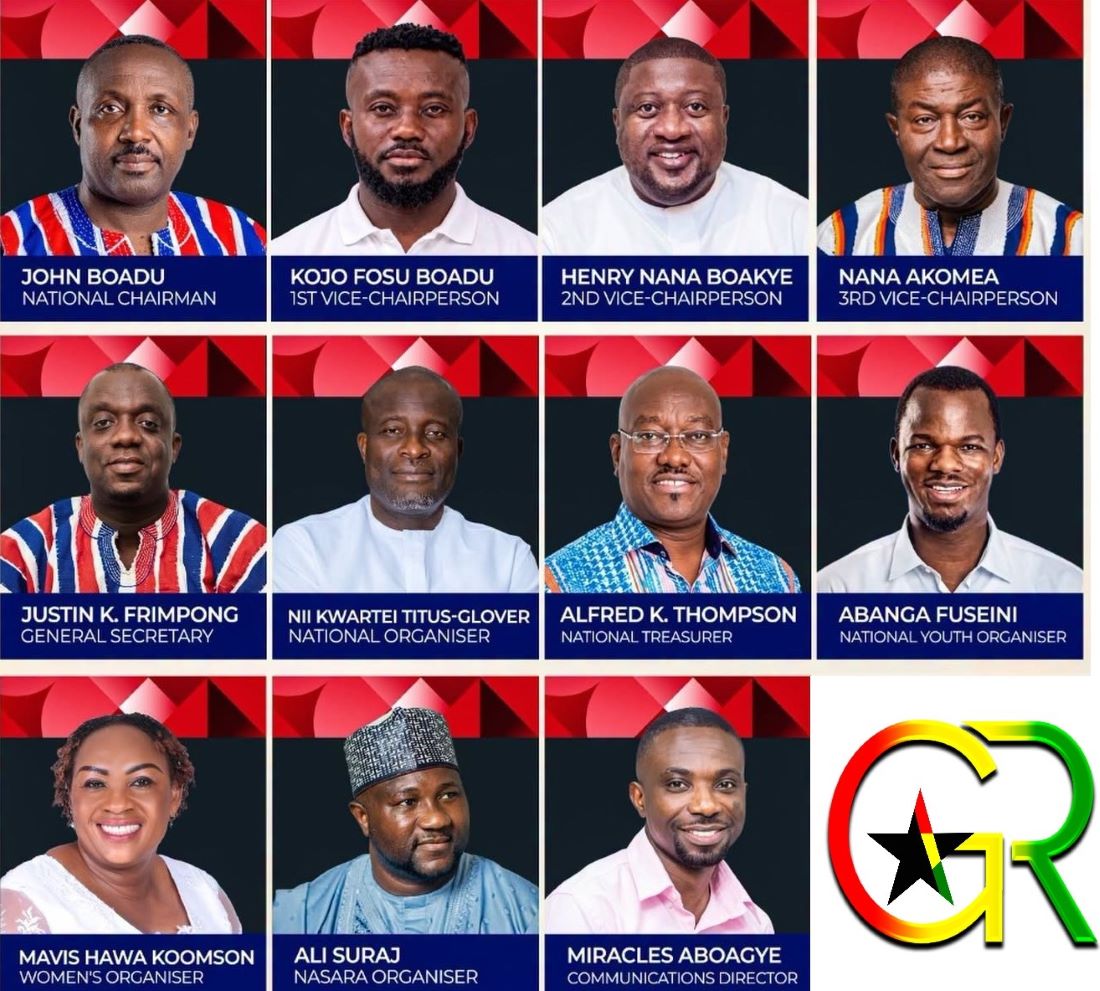
The election also saw Justin Frimpong Kodua retain the position of General Secretary, while Daniel Nii Kwartei Titus-Glover became National Organiser and Alfred Kojo Thompson was elected National Treasurer.
In total, 11 individuals have emerged as winners across the nine categories of national executive positions, because three separate Vice-Chairperson positions are filled through the same election.
NPP National Executive Elections 2026: Full List of Winners
| Position | Winner | Votes |
|---|---|---|
| National Chairman | John Boadu | 2,888 |
| 1st Vice Chairman | Kojo Fosu Boadu | 3,160 |
| 2nd Vice Chairman | Henry Nana Boakye | 3,061 |
| 3rd Vice Chairman | Nana Akomea | 2,987 |
| General Secretary | Justin Frimpong Kodua | 4,486 |
| National Treasurer | Alfred Kojo Thompson | 2,243 |
| National Organiser | Daniel Nii Kwartei Titus-Glover | 2,964 |
| National Youth Organiser | Abagna Yakubu Fusani | 1,550 |
| National Women’s Organiser | Mavis Hawa Koomson | 782 |
| National Nasara Organiser | Mohammed Ali Suraj | 372 |
| National Communications Director | Dennis Edward Miracles Aboagye | Unopposed |
The results were reported by the Ghana News Agency following the National Executive Conference.
1. John Boadu Wins NPP National Chairman Election
John Boadu is the new National Chairman of the New Patriotic Party.
The former NPP General Secretary returned to the national executive leadership structure by winning the chairmanship contest with 2,888 votes.
He defeated:
- Boakye Kyerematen Agyarko — 2,408 votes
- Paul Afoko — 790 votes
- Sammy Crabbe — 41 votes
Sammy Crabbe withdrew from the race shortly before voting began and endorsed John Boadu, but his name remained associated with the ballot and he recorded 41 votes.
Boadu’s victory is particularly significant because he previously served as NPP General Secretary and was defeated by Justin Frimpong Kodua in the party’s 2022 General Secretary contest.
His election now places him at the head of the party as it seeks to rebuild its structures and prepare for the 2028 elections.
NPP National Chairman Results
| Candidate | Votes | Position |
|---|---|---|
| John Boadu | 2,888 | Winner |
| Boakye Kyerematen Agyarko | 2,408 | Runner-up |
| Paul Afoko | 790 | Third |
| Sammy Crabbe | 41 | Withdrew |
John Boadu succeeds Stephen Ayesu Ntim, who did not seek re-election.
2. Kojo Fosu Boadu Becomes First Vice Chairman
The Vice-Chairperson election was one of the most competitive contests of the 2026 NPP elections.
The three candidates with the highest votes became the party’s three Vice-Chairpersons.
Kojo Fosu Boadu emerged as the leading candidate and became First Vice Chairman.
He secured 3,160 votes, according to the Ghana News Agency’s official-results report.
The three successful candidates were:
- Kojo Fosu Boadu — 3,160 votes
- Henry Nana Boakye — 3,061 votes
- Nana Akomea — 2,987 votes
Dr Mustapha Abdul-Hamid, despite receiving 2,956 votes, finished outside the top three.
Full NPP Vice-Chairperson Results
| Candidate | Votes | Outcome |
|---|---|---|
| Kojo Fosu Boadu | 3,160 | 1st Vice Chairman |
| Henry Nana Boakye | 3,061 | 2nd Vice Chairman |
| Nana Akomea | 2,987 | 3rd Vice Chairman |
| Mustapha Abdul-Hamid | 2,956 | Not elected |
| Richard Ahiagbah | 1,001 | Not elected |
| Masawudu Osman | 890 | Not elected |
| George Kwabena Abankwah Yeboah | 247 | Not elected |
| Horma Akesie Miezah | 232 | Not elected |
| Samuel Pyne | 206 | Not elected |
| Abena Pokua Boaitey Amoah | 194 | Not elected |
| Richard Oti Aboagye | 152 | Not elected |
| Yaa Amponsah Frimpong | 153 | Not elected |
| Bright Esselfie Kumi | 51 | Not elected |
The three highest vote-getters therefore form the new NPP Vice-Chairmanship team.
3. Justin Frimpong Kodua Retains NPP General Secretary Position
One of the biggest victories of the NPP National Executive Elections was recorded by incumbent General Secretary Justin Frimpong Kodua.
Kodua won decisively with 4,486 votes, retaining the General Secretary position.
His challengers recorded:
- Sylvester Tetteh — 1,340 votes
- Eugene Boakye Antwi — 162 votes
- Dr Charles Dwamena — 129 votes
NPP General Secretary Results
| Candidate | Votes | Outcome |
|---|---|---|
| Justin Frimpong Kodua | 4,486 | Winner |
| Sylvester Tetteh | 1,340 | Runner-up |
| Eugene Boakye Antwi | 162 | Not elected |
| Dr Charles Dwamena | 129 | Not elected |
Kodua’s victory means the NPP will enter its next organisational phase with continuity at the General Secretariat.
His re-election is also politically notable because John Boadu, the newly elected chairman, was the NPP General Secretary before Kodua defeated him in the 2022 internal election.
The two politicians will now serve together at the top of the party’s national administration.
4. Alfred Kojo Thompson Wins NPP National Treasurer Election
Alfred Kojo Thompson has been elected the NPP’s new National Treasurer.
He obtained 2,243 votes.
The other candidates recorded:
- Tahiru Issahaku Moomin — 1,605 votes
- Collins Nuntwiri Nuamah — 1,582 votes
- Ruka Saida Ahmed — 687 votes
NPP National Treasurer Results
| Candidate | Votes | Outcome |
|---|---|---|
| Alfred Kojo Thompson | 2,243 | Winner |
| Tahiru Issahaku Moomin | 1,605 | Runner-up |
| Collins Nuntwiri Nuamah | 1,582 | Not elected |
| Ruka Saida Ahmed | 687 | Not elected |
5. Titus-Glover Wins NPP National Organiser Election
Former Greater Accra Regional Minister Daniel Nii Kwartei Titus-Glover has been elected National Organiser of the NPP.
Titus-Glover secured 2,964 votes to win the highly competitive contest.
His closest challenger was Ali Maiga Halidu, who received 2,231 votes.
The complete results were:
| Candidate | Votes | Outcome |
|---|---|---|
| Daniel Nii Kwartei Titus-Glover | 2,964 | Winner |
| Ali Maiga Halidu | 2,231 | Runner-up |
| Kwame Amo Prempeh | 445 | Not elected |
| Emmanuel Korsi Bodja | 145 | Not elected |
| Nana Kwadjo/Seth Agyei Yeboah | 137 | Not elected |
| Daniel Agyenim Boateng | 105 | Not elected |
| Archibald Gamor Korletey | 85 | Not elected |
Titus-Glover’s victory gives him responsibility for one of the NPP’s most important grassroots organisational positions as the party prepares for 2028.
6. Abagna Yakubu Fusani Wins NPP National Youth Organiser
Abagna Yakubu Fusani has been elected National Youth Organiser of the NPP.
He obtained 1,550 votes.
His closest challenger was Clement Opoku Gyamfi, who received 631 votes.
The other results were:
- Michael Osei Boateng — 78
- Chris Lloyd Nii Kwei Asamoah — 46
- Vera Oye Bram-Larbi — 44
- Alfred Ababio Kumi — 25
NPP National Youth Organiser Results
| Candidate | Votes | Outcome |
|---|---|---|
| Abagna Yakubu Fusani | 1,550 | Winner |
| Clement Opoku Gyamfi | 631 | Runner-up |
| Michael Osei Boateng | 78 | Not elected |
| Chris Lloyd Nii Kwei Asamoah | 46 | Not elected |
| Vera Oye Bram-Larbi | 44 | Not elected |
| Alfred Ababio Kumi | 25 | Not elected |
7. Mavis Hawa Koomson Wins NPP National Women’s Organiser Election
Former Minister Mavis Hawa Koomson has been elected National Women’s Organiser of the NPP.
She secured 782 votes, defeating Hajia Safia Mohammed, who received 429 votes.
NPP Women’s Organiser Results
| Candidate | Votes | Outcome |
|---|---|---|
| Mavis Hawa Koomson | 782 | Winner |
| Hajia Safia Mohammed | 429 | Runner-up |
Hawa Koomson will oversee the party’s national women’s organisational activities as the NPP prepares for another major electoral battle in 2028.
8. Mohammed Ali Suraj Wins NPP National Nasara Organiser Election
Mohammed Ali Suraj has been elected National Nasara Organiser.
He obtained 372 votes, defeating Saalim Mansuru Bamba, who received 311 votes, and Awal Mohammed, who secured 106 votes.
NPP Nasara Organiser Results
| Candidate | Votes | Outcome |
|---|---|---|
| Mohammed Ali Suraj | 372 | Winner |
| Saalim Mansuru Bamba | 311 | Runner-up |
| Awal Mohammed | 106 | Third |
The result gives Ali Suraj responsibility for the party’s Nasara organisational structure.
9. Dennis Miracles Aboagye Becomes NPP Communications Director
Dennis Edward Miracles Aboagye has been elected the NPP’s National Communications Director.
Unlike several other contests, the Communications Director race did not require a competitive vote because Aboagye was the sole candidate remaining.
He was therefore elected unopposed.
His role will be particularly significant as the party develops its communications strategy ahead of the 2028 general election.
Complete NPP National Executive Election Results 2026
Here is the complete leadership line-up:
National Chairman
John Boadu — 2,888 votes
First Vice Chairman
Kojo Fosu Boadu — 3,160 votes
Second Vice Chairman
Henry Nana Boakye — 3,061 votes
Third Vice Chairman
Nana Akomea — 2,987 votes
General Secretary
Justin Frimpong Kodua — 4,486 votes
National Treasurer
Alfred Kojo Thompson — 2,243 votes
National Organiser
Daniel Nii Kwartei Titus-Glover — 2,964 votes
National Youth Organiser
Abagna Yakubu Fusani — 1,550 votes
National Women’s Organiser
Mavis Hawa Koomson — 782 votes
National Nasara Organiser
Mohammed Ali Suraj — 372 votes
National Communications Director
Dennis Edward Miracles Aboagye — elected unopposed
Who Are the Biggest Winners of the NPP 2026 Elections?
John Boadu — Biggest Political Winner
The most prominent winner is undoubtedly John Boadu.
His election as National Chairman represents a major return to the centre of NPP national leadership. He secured 2,888 votes and will now head the party’s national executive structure.
His immediate challenge will be to unite the party, strengthen its grassroots structures and help position the NPP for the 2028 election.
Boadu has already said the party will work to rebuild its grassroots and restore its electoral strength.
Justin Kodua — Major Victory for Continuity
Justin Frimpong Kodua is another major winner.
With 4,486 votes, he recorded the strongest numerical performance among the contested single-office races reported by the Ghana News Agency.
His re-election provides continuity at the General Secretariat while the party undergoes a leadership transition at the chairmanship level.
Titus-Glover — Strong Organisational Mandate
Titus-Glover’s 2,964 votes gave him a clear victory in the National Organiser race.
His position will place him at the centre of grassroots mobilisation as the NPP prepares for 2028.
Kojo Fosu Boadu, Henry Nana Boakye and Nana Akomea
The Vice-Chairmanship race produced three successful candidates:
- Kojo Fosu Boadu
- Henry Nana Boakye
- Nana Akomea
They will serve as the three Vice-Chairpersons of the party.
Notable Losers in the NPP National Executive Elections
An election victory for one candidate necessarily means other aspirants did not make it into the new national executive structure.
Boakye Agyarko
Boakye Agyarko came very close to John Boadu in the chairmanship race, obtaining 2,408 votes against Boadu’s 2,888.
Despite losing, his result demonstrates that he maintained substantial support among delegates.
Paul Afoko
Former National Chairman Paul Afoko secured 790 votes, placing third in the chairmanship election.
Mustapha Abdul-Hamid
Dr Mustapha Abdul-Hamid recorded 2,956 votes in the Vice-Chairmanship election.
However, because three candidates had to be selected and Nana Akomea finished ahead of him with 2,987 votes, Abdul-Hamid narrowly missed out on the Vice-Chairmanship.
The margin between Abdul-Hamid and Nana Akomea was only 31 votes, based on the GNA figures.
Ali Maiga Halidu
Ali Maiga Halidu was the closest challenger to Titus-Glover in the National Organiser contest, receiving 2,231 votes.
Clement Opoku Gyamfi
Clement Opoku Gyamfi finished second in the National Youth Organiser contest with 631 votes, behind Abagna Yakubu Fusani’s 1,550.
The Biggest Vote Margins
The results also reveal several decisive victories.
General Secretary: Justin Kodua defeated Sylvester Tetteh by 3,146 votes.
National Organiser: Titus-Glover defeated Ali Maiga Halidu by 733 votes.
National Chairman: John Boadu defeated Boakye Agyarko by 480 votes.
National Youth Organiser: Abagna Yakubu Fusani defeated Clement Opoku Gyamfi by 919 votes.
National Treasurer: Alfred Kojo Thompson defeated Tahiru Issahaku Moomin by 638 votes.
National Women’s Organiser: Mavis Hawa Koomson defeated Safia Mohammed by 353 votes.
These calculations are based on the reported final vote totals.
NPP National Executive Elections 2026: What Happens Next?
The election marks the beginning of a new organisational chapter for the NPP.
The new executives have a four-year mandate and will be expected to:
- Reorganise the party at the grassroots.
- Strengthen constituency and regional structures.
- Improve internal coordination.
- Mobilise supporters ahead of the 2028 election.
- Develop a stronger national communications strategy.
- Expand youth and women’s participation.
- Strengthen engagement with communities and various interest groups.
- Help the NPP rebuild following its 2024 general-election defeat.
The new leadership will therefore face a major political assignment: rebuilding the NPP and positioning it to compete effectively for power in 2028.
NPP National Elections 2026 and the 2028 Presidential Election
The 2026 national executive elections are particularly important because the new executives will oversee the party during the period leading to Ghana’s 2028 presidential and parliamentary elections.
The National Chairman, General Secretary, National Organiser, Communications Director and other executives will all have important responsibilities in preparing the party’s structures and messaging.
The election therefore represents more than an internal leadership contest. It is also an important step in the NPP’s broader attempt to reorganise itself and return to government.
Why John Boadu’s Victory Matters
John Boadu’s election is one of the defining moments of the 2026 NPP conference.
As a former General Secretary, Boadu already has extensive experience within the party’s national structure. His victory now gives him the authority to lead the national executive team.
He will have to work closely with Justin Kodua, who retained the General Secretary position, as well as the new Vice-Chairpersons, National Organiser, Treasurer, Youth Organiser, Women’s Organiser, Nasara Organiser and Communications Director.
The new leadership will need to balance continuity with demands for organisational change.
NPP National Executive Elections 2026: Final Winners at a Glance
National Chairman: John Boadu
First Vice Chairman: Kojo Fosu Boadu
Second Vice Chairman: Henry Nana Boakye
Third Vice Chairman: Nana Akomea
General Secretary: Justin Frimpong Kodua
National Treasurer: Alfred Kojo Thompson
National Organiser: Daniel Nii Kwartei Titus-Glover
National Youth Organiser: Abagna Yakubu Fusani
National Women’s Organiser: Mavis Hawa Koomson
National Nasara Organiser: Mohammed Ali Suraj
National Communications Director: Dennis Edward Miracles Aboagye
The NPP National Executive Elections 2026 have produced a new leadership team headed by John Boadu as National Chairman.
Boadu defeated Boakye Agyarko and Paul Afoko to take the chairmanship, while Justin Frimpong Kodua retained the General Secretary position with 4,486 votes.
The new Vice-Chairmanship team comprises Kojo Fosu Boadu, Henry Nana Boakye and Nana Akomea. Titus-Glover won the National Organiser race, Alfred Kojo Thompson became National Treasurer, Abagna Yakubu Fusani won the Youth Organiser position, Mavis Hawa Koomson became Women’s Organiser and Mohammed Ali Suraj won the Nasara Organiser position.
Dennis Miracles Aboagye was elected Communications Director unopposed.
The 11 successful national officers now have the responsibility of steering the NPP for the next four years, rebuilding the party’s organisational machinery and preparing it for the crucial 2028 Ghana general election.
The 2026 NPP election has therefore ended one chapter of the party’s internal reorganisation and opened another: the challenge of transforming the newly elected leadership into an effective political machine capable of competing for power in 2028.