




























































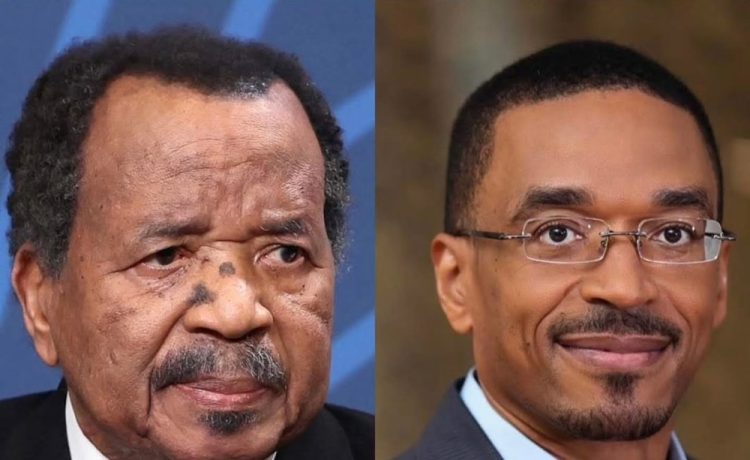
AFRICA: In April 2026, a historic political development unfolded in Cameroon when President Paul Biya appointed his son, Franck Emmanuel Biya, as the Vice President of the Republic of Cameroon.
According to GhanaRegions.com analyst, the appointment followed a constitutional amendment that reintroduced the office of vice president after more than four decades. The decision has sparked debate across Africa and internationally, with supporters describing it as a strategic succession plan and critics warning about the risks of dynastic politics.
Franck Emmanuel Biya Biography
Early Life and Background
Franck Emmanuel Biya (born Emmanuel Franck Olivier Biya on August 21, 1971) is a Cameroonian businessman and political figure. He was born in Yaoundé, the capital of Cameroon, to President Paul Biya and his first wife, Jeanne-Irène Atyam.
Growing up in the presidential family placed Franck Biya in the center of Cameroonian political life from an early age. However, for many years he maintained a relatively low public profile compared to his father.
Education
Franck Biya pursued higher education in the United States. He studied at the University of Southern California, graduating in 1994 with a degree in Political Science and Economics.
His international education and exposure to global finance influenced his later career in investment and entrepreneurship.
Business Career
Before entering government, Franck Biya developed a career mainly in business and investment.
Early Financial Career
Between 1995 and 1997, he worked as an intern at the Bank of Central African States, the regional central bank serving several Central African countries.
Forestry and Investment Ventures
From 1997 to 2004, he became a partner in a forestry company operating in Cameroon’s timber sector, one of the country’s most important economic industries.
Venture Capital Activities
In 2004, he founded Venture Capital PLC, an investment firm that focused on financing international companies and supporting business ventures across Africa and other global markets.
These activities helped him build connections with regional business networks and international investors.
Appointment as Vice President of Cameroon
Restoration of the Vice Presidency
The office of Vice President had not existed in Cameroon since 1972, when the country transitioned from a federal system to a unitary state structure.
In April 2026, Cameroon’s National Assembly approved a constitutional amendment restoring the position. The reform aimed to establish a clearer line of presidential succession and strengthen executive governance.
This constitutional change represents one of the most significant political reforms in Cameroon in recent decades.
Official Appointment
Following the constitutional amendment, President Paul Biya issued a presidential decree appointing Franck Emmanuel Biya to several key positions:
- Vice President of the Republic of Cameroon
- Head of the Armed Forces
- Minister Delegate at the Ministry of Defence
These roles place him at the center of both the country’s political leadership and military command structure.
Constitutional Role and Succession
Under the revised constitutional framework:
- The vice president is appointed directly by the president.
- The vice president automatically assumes the presidency if the president dies, resigns, or becomes incapacitated.
- The vice president completes the remainder of the presidential term.
This arrangement effectively positions Franck Biya as the designated successor to his father.
Political Context and Controversy
Paul Biya’s Long Rule
President Paul Biya has governed Cameroon since 1982, making him one of the longest-serving heads of state in the world.
As of 2026, he is 93 years old, which has intensified national and international discussions about political succession and leadership transition in Cameroon.
Succession Debate
The appointment of Franck Biya has triggered widespread debate among political analysts, civil society groups, and opposition parties.
Supporters’ Perspective
Supporters argue that the reform:
- Ensures continuity in governance
- Prevents a power vacuum
- Promotes political stability
Critics’ Perspective
Opposition leaders and critics argue that:
- The appointment suggests dynastic succession.
- It concentrates power within the Biya family.
- The vice presidency should ideally be filled through elections rather than presidential appointment.
Some critics have described the move as a step toward a political system resembling a “republican monarchy.”
Political Influence and Future Prospects
Potential Presidential Successor
For years, political observers had speculated that Franck Biya could eventually succeed his father. His appointment as vice president now formalizes that possibility within the constitutional structure of Cameroon.
Role in National Security
As Head of the Armed Forces, Franck Biya assumes leadership during a period of security challenges in Cameroon, including:
- The Anglophone separatist crisis
- Insurgency threats in the Far North region
- Political tensions related to governance and reform
His leadership in national security matters will likely play a key role in shaping his political reputation.
Personal Life
Franck Biya is married and has four children. Despite belonging to one of Africa’s most powerful political families, he has generally maintained a relatively private lifestyle compared with many public figures.
The appointment of Franck Emmanuel Biya as Vice President marks a major turning point in the political landscape of Cameroon. By restoring the vice presidency and assigning the role to his son, President Paul Biya has established a clear succession pathway within the country’s executive structure.
Whether this decision strengthens political stability or intensifies debate about dynastic governance remains to be seen. What is certain is that Franck Biya now occupies one of the most influential positions in Cameroon and will play a central role in the nation’s political future.